Unpacking Certification Timelines for Random Outcome Integrity in Multi-Jurisdictional Interactive Gaming Software
Jakob Jenkins · Jun 24, 2026
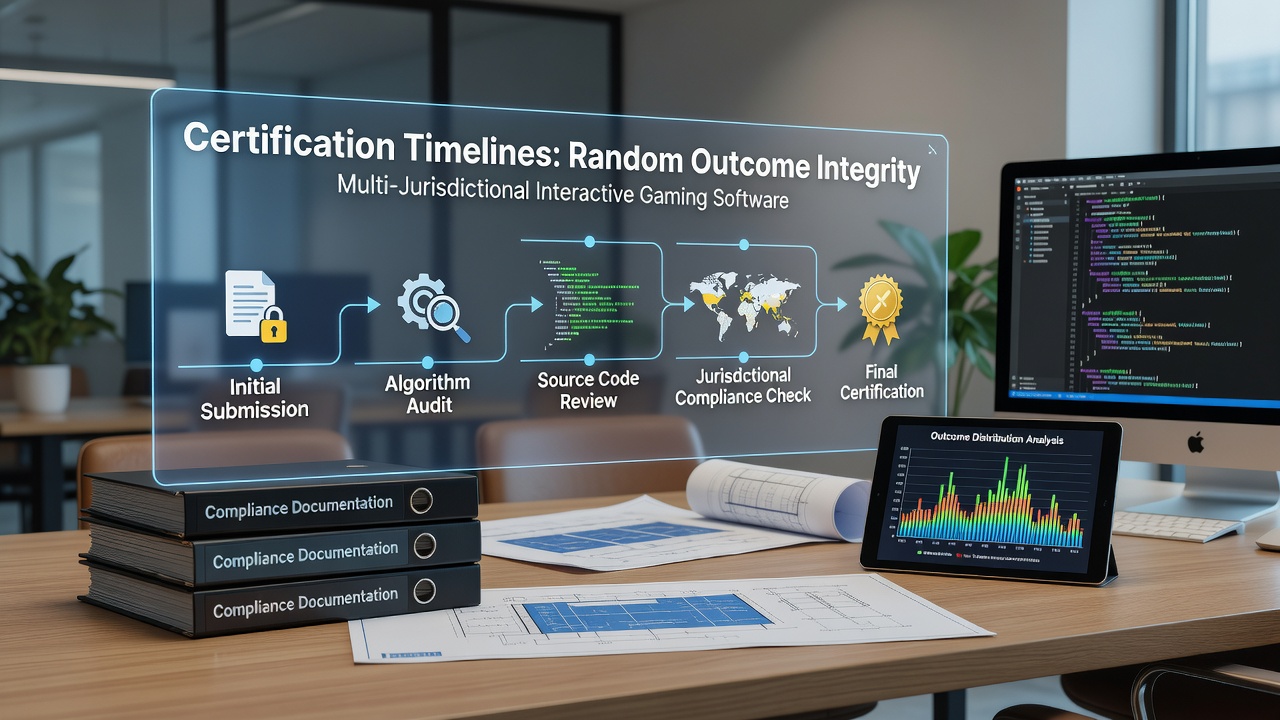
Unpacking Certification Timelines for Random Outcome Integrity in Multi-Jurisdictional Interactive Gaming Software
Certification for random outcome integrity stands as a core requirement in interactive gaming software that spans multiple regulatory zones, and timelines for completing these evaluations often stretch from weeks into several months depending on the jurisdictions involved. Software developers submit their random number generators along with supporting documentation to approved testing laboratories, where specialists examine statistical properties, source code, and implementation methods to confirm that outcomes remain unpredictable and unbiased across all game types.
Core Elements of Random Outcome Certification
Testing begins with submission of the RNG algorithm and associated hardware or software modules, after which labs run millions of simulated outcomes to measure distribution uniformity, independence between results, and resistance to prediction. Each jurisdiction maintains its own set of technical standards, so a single software package may require separate evaluations even when the underlying RNG remains identical. Observers note that labs such as those accredited by the Alcohol and Gaming Commission of Ontario follow documented protocols that specify minimum sample sizes and reporting formats before issuing formal compliance statements.
Timeline Variations Across Regulatory Regions
Initial reviews in a single market can conclude within four to eight weeks when documentation arrives complete and no code revisions surface during analysis. Multi-jurisdictional projects introduce sequential or parallel tracks, where one authority completes its assessment before another begins, pushing total elapsed time beyond twelve weeks in many documented cases. Data from industry reports shows that European and North American regulators often coordinate on shared technical benchmarks, yet differences in re-testing requirements after software updates create additional scheduling layers.
Factors That Extend or Shorten Evaluation Periods
Complexity of the gaming product directly influences duration because table games with live dealer integration or progressive jackpot systems demand extra scrutiny of how random elements interact with external data feeds. When developers provide pre-certified RNG modules that already carry approvals from comparable authorities, laboratories frequently reduce the scope of fresh statistical testing and focus instead on integration checks. June 2026 saw several multi-state operators submit updated mobile platforms for simultaneous review in three jurisdictions, and early indicators suggest those coordinated filings shortened average turnaround by roughly twenty percent compared with staggered submissions.

Role of Accredited Testing Facilities
Approved laboratories operate under strict independence rules and must maintain accreditation from recognized bodies such as the New Jersey Division of Gaming Enforcement before they can issue certificates accepted by that state. These facilities employ statisticians and software engineers who apply standardized test suites covering periodicity, autocorrelation, and entropy measurements. When discrepancies appear, developers receive detailed reports outlining required modifications, after which a fresh submission cycle begins and extends the overall timeline.
Coordination Challenges in Cross-Border Deployments
Interactive gaming operators that launch products across U.S. states, Canadian provinces, and Australian territories encounter differing documentation formats and renewal intervals that complicate project planning. Some regulators accept prior certifications from peer agencies while others mandate full re-evaluation regardless of existing approvals. Industry associations have published guidance documents that map overlapping requirements, helping companies identify opportunities for consolidated testing without violating local statutes.
One documented case involved a European supplier that aligned its RNG update schedule with the certification window of a major North American platform provider, allowing both parties to share laboratory resources and complete evaluations within a single quarter. Such alignments remain dependent on mutual recognition agreements that continue to evolve as new markets open.
Emerging Practices and Documentation Standards
Recent regulatory updates emphasize continuous monitoring after initial certification, requiring operators to submit periodic RNG health reports generated by automated logging systems. These ongoing obligations replace some traditional re-certification events and can reduce peak workload during launch windows. Research institutions tracking regulatory trends have compiled datasets showing that jurisdictions adopting automated monitoring frameworks experienced measurable decreases in average certification cycle length between 2024 and 2026.
Conclusion
Certification timelines for random outcome integrity reflect the interplay between technical complexity, regulatory diversity, and operational coordination across borders. Laboratories, developers, and oversight bodies each contribute data points that shape how quickly software reaches compliant status in multiple markets simultaneously. Continued refinement of mutual recognition mechanisms and standardized reporting formats offers pathways toward more predictable schedules while preserving the statistical assurances that protect players and operators alike.