Tracing the Flow of Promotional Credits Through Multi-Tiered Reward Structures in International Betting Networks
Uma Weber · Jun 15, 2026

Tracing the Flow of Promotional Credits Through Multi-Tiered Reward Structures in International Betting Networks
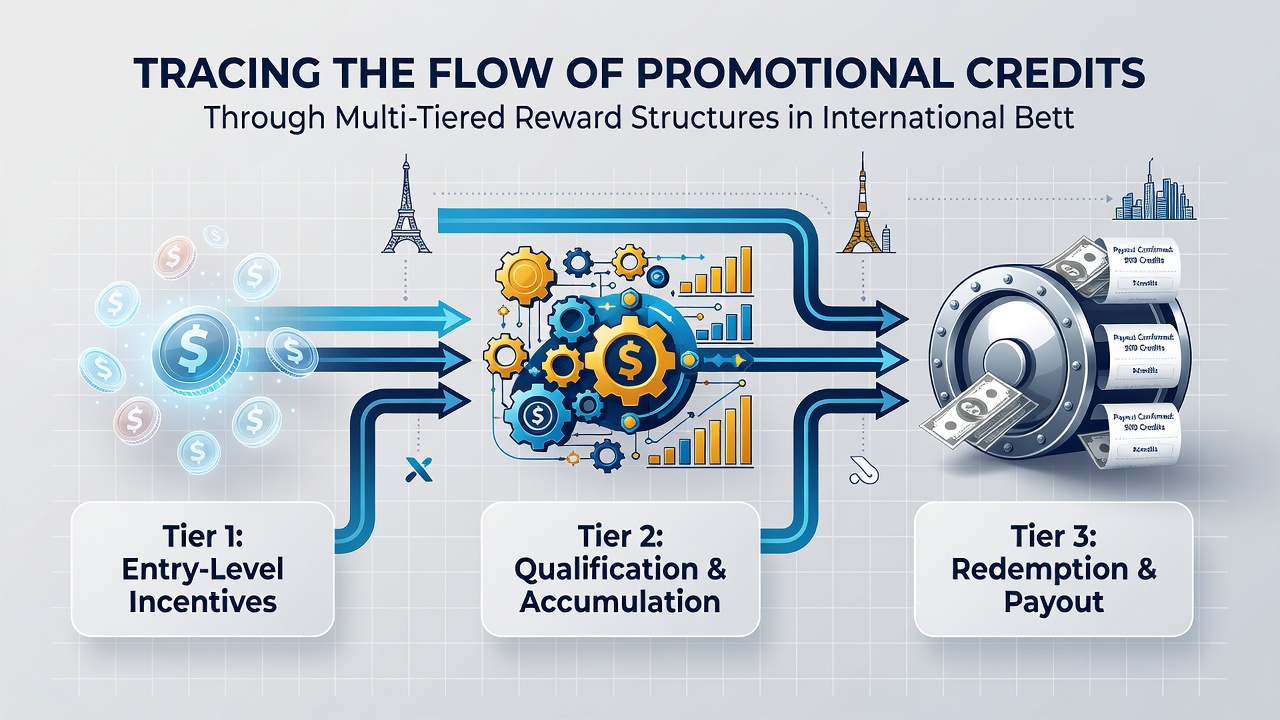
Promotional credits move through multi-tiered reward structures in international betting networks via defined allocation rules, conversion rates, and redemption thresholds that operators establish to manage player progression. These systems typically organize rewards into entry-level, intermediate, and premium tiers, with credits accumulating based on wager volume, game type participation, and account activity metrics. Operators track these flows through centralized databases that log every credit issuance, adjustment, and redemption event across jurisdictions.
Mechanics of Credit Allocation in Tiered Systems
Entry-level tiers often grant base credits for initial deposits or first wagers, while higher tiers unlock accelerated earning rates and exclusive redemption options. Data from regulatory filings show that credits generated at lower tiers convert to playable balances at standard ratios, whereas premium-tier credits frequently carry bonus multipliers or reduced expiration periods. Networks maintain separate ledgers for each tier to prevent cross-contamination between reward categories, and automated scripts apply these rules at the moment of wager settlement.
International networks coordinate these processes through shared application programming interfaces that synchronize player data across borders while respecting local currency conversions and tax withholdings. In June 2026 several major platforms adjusted their tier thresholds upward to align with updated responsible gaming parameters in multiple markets.
Cross-Border Movement and Conversion Pathways
Credits earned in one jurisdiction transfer to affiliated operators in another when players migrate accounts or participate in network-wide promotions. Conversion protocols apply exchange rates derived from real-time market data and deduct network fees before crediting the destination ledger. Observers note that European operators commonly route credits through central clearing houses, whereas Asian networks favor direct peer-to-peer ledger updates between licensed entities.
Regulators require operators to maintain audit trails that document every credit's origin, intermediate stops, and final disposition. These records enable authorities to verify compliance with advertising standards and player fund protection rules. According to information published by the Nevada Gaming Control Board, multi-jurisdictional operators submitted over 2.4 million transaction logs related to promotional credit movements during the first quarter of 2026.
Technology Supporting Credit Tracking
Blockchain-based ledgers and real-time analytics platforms now underpin many international networks, allowing instantaneous verification of credit provenance without exposing sensitive player details. Smart contracts enforce tier advancement criteria automatically once predefined wager thresholds are met, reducing manual intervention and associated errors. Middleware solutions integrate these tools with legacy casino management systems so that credits remain visible across desktop, mobile, and kiosk interfaces simultaneously.
Security protocols encrypt credit identifiers at the point of issuance and decrypt them only at redemption terminals. This approach limits exposure during transmission across international data routes. Research published by the Australian Institute of Criminology indicates that networks employing end-to-end encryption reported 37 percent fewer disputed credit transactions compared with those using standard database encryption alone.
Regulatory Oversight Across Regions
Each licensing jurisdiction imposes distinct reporting frequencies and data formats for promotional credit activity. Operators consolidate these submissions through specialized compliance teams that translate internal logs into regulator-specific templates. In Canada the Alcohol and Gaming Commission of Ontario requires monthly summaries of credit issuance volumes segmented by tier, while Australian state regulators request quarterly breakdowns that include player retention statistics tied to each reward level.
Discrepancies between jurisdictions can delay credit redemptions when operators must reconcile conflicting documentation standards. Networks address these bottlenecks by maintaining parallel record sets and submitting harmonized reports where bilateral agreements permit data sharing.
Conclusion
Promotional credit flows in multi-tiered international betting networks depend on synchronized allocation rules, secure tracking technologies, and jurisdiction-specific compliance procedures. Operators continue refining these pathways to accommodate evolving regulatory expectations while preserving operational efficiency across borders. Continued investment in ledger technology and standardized reporting formats supports transparent movement of credits from issuance through final redemption.