Seasonal Shifts in Mobile Slot Engagement Tied to Regional Payment Method Availability
Lars Hartmann · Jul 29, 2026
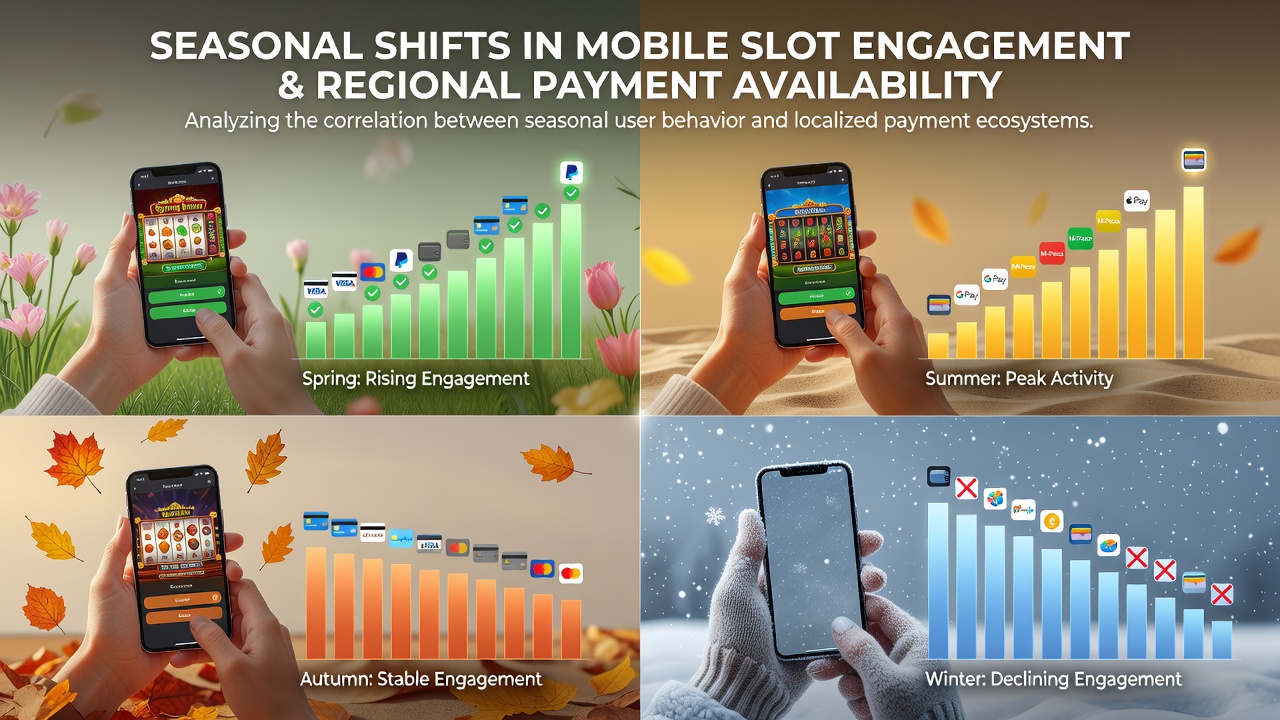
Seasonal Shifts in Mobile Slot Engagement Tied to Regional Payment Method Availability
Patterns in mobile slot activity shift noticeably across different regions as payment method options expand or contract with local calendars and economic cycles, and researchers tracking these movements have documented clear correlations between seasonal events and the types of transactions that users complete on regulated platforms. In North American markets for instance, summer months often coincide with increased use of digital wallets that facilitate quick cross-border transfers, while winter periods see rises in domestic bank transfers tied to holiday spending budgets. Data compiled through 2025 and into the first half of 2026 reveals that these fluctuations track closely with the rollout of new payment partnerships in specific jurisdictions, creating measurable lifts in session frequency when options like instant bank links become available during peak travel windows.
North American Trends and Payment Timing
Observers note that Canadian provinces report elevated mobile slot volumes during July and August when vacation pay deposits hit accounts and platforms introduce temporary support for travel-oriented e-wallets, and figures from the Alcohol and Gaming Commission of Ontario show that engagement in Ontario-licensed apps climbed steadily in those months as users paired seasonal bonuses with newly enabled instant deposit methods. The same datasets indicate that December through February brings a different spike, driven by credit card promotions tied to year-end shopping cycles rather than leisure travel. These shifts demonstrate how regional banking calendars directly influence which payment rails operators prioritize for mobile users, and operators adjust their integrations accordingly to capture the resulting activity waves.
European Patterns During Summer Mobility
Across several European Economic Area countries, summer tourism seasons align with expanded acceptance of multi-currency digital wallets that handle vacation spending, and July 2026 data from platform operators showed particular strength in markets where local banks partnered with travel-friendly processors to reduce foreign transaction friction. Users in these regions tend to move toward methods that support seamless top-ups while away from home, leading to longer average session durations on mobile slots compared with shoulder seasons when fewer such options sit at the top of checkout screens. Regulatory filings from multiple jurisdictions confirm that engagement curves flatten when payment availability contracts after major holidays, underscoring the direct link between accessible rails and user retention during high-mobility periods.
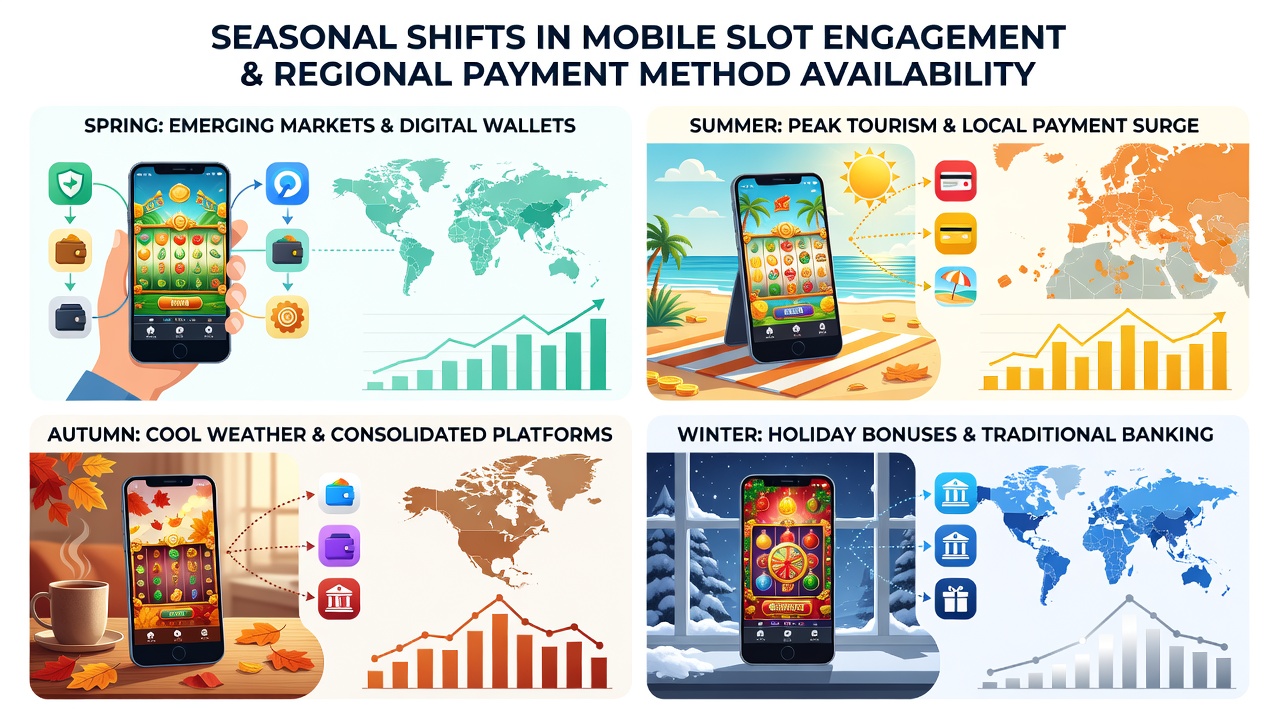
Asia-Pacific markets display their own rhythms, with Chinese New Year periods triggering surges in e-wallet usage that carry over into mobile slot play, while Australian summer months see increased activity linked to local bank transfer promotions that coincide with school holidays. Research reports compiled by academic groups at institutions such as the University of Sydney have tracked these movements and found that platforms offering region-specific payment calendars maintain steadier engagement across seasons because they reduce friction at the exact moments when users have both time and funds available. The same studies highlight that markets with limited seasonal payment flexibility experience sharper drops outside core months, as users revert to less convenient methods or delay activity until preferred options return.
Regulatory and Infrastructure Influences
Changes in payment infrastructure often precede the largest seasonal engagement movements, and governments that authorize new processor partnerships ahead of peak periods create the conditions for measurable upticks in mobile slot participation. In July 2026 several operators in North American and European markets rolled out updated integrations timed with summer travel, resulting in documented increases in deposit frequency among users who previously encountered barriers during cross-border play. These infrastructure adjustments interact with existing seasonal spending patterns, amplifying activity where payment availability matches user mobility rather than lagging behind it. Industry analyses continue to map these interactions because they reveal how regulatory timing around payment approvals shapes annual engagement graphs across different territories.
Future Tracking and Data Collection
Continued monitoring of these seasonal-payment linkages relies on aggregated transaction logs from licensed operators, and organizations that compile multi-jurisdictional reports provide the baseline datasets needed to isolate the effects of payment availability from other variables such as marketing campaigns or game releases. As more regions update their permitted payment lists in advance of known high-activity windows, the resulting engagement data offers clearer evidence of how infrastructure decisions translate into user behavior shifts. Observers expect additional clarity from 2026 onward as standardized reporting requirements expand and allow finer-grained comparisons between markets with differing seasonal payment calendars.
Conclusion
The connection between seasonal mobile slot engagement and regional payment method availability rests on observable transaction patterns that align with local calendars, banking cycles, and regulatory approvals for new processing options. Markets that synchronize payment expansions with periods of elevated user mobility or spending capacity record the most consistent activity lifts, while those with static offerings experience more pronounced seasonal dips. Ongoing data collection from regulatory bodies and research institutions will continue to clarify these relationships as payment ecosystems evolve in response to both seasonal demand and jurisdictional policy changes.