Mapping the Evolution of Welcome Package Structures in Emerging Online Gambling Regions
Drew Lang · Jun 19, 2026
Mapping the Evolution of Welcome Package Structures in Emerging Online Gambling Regions
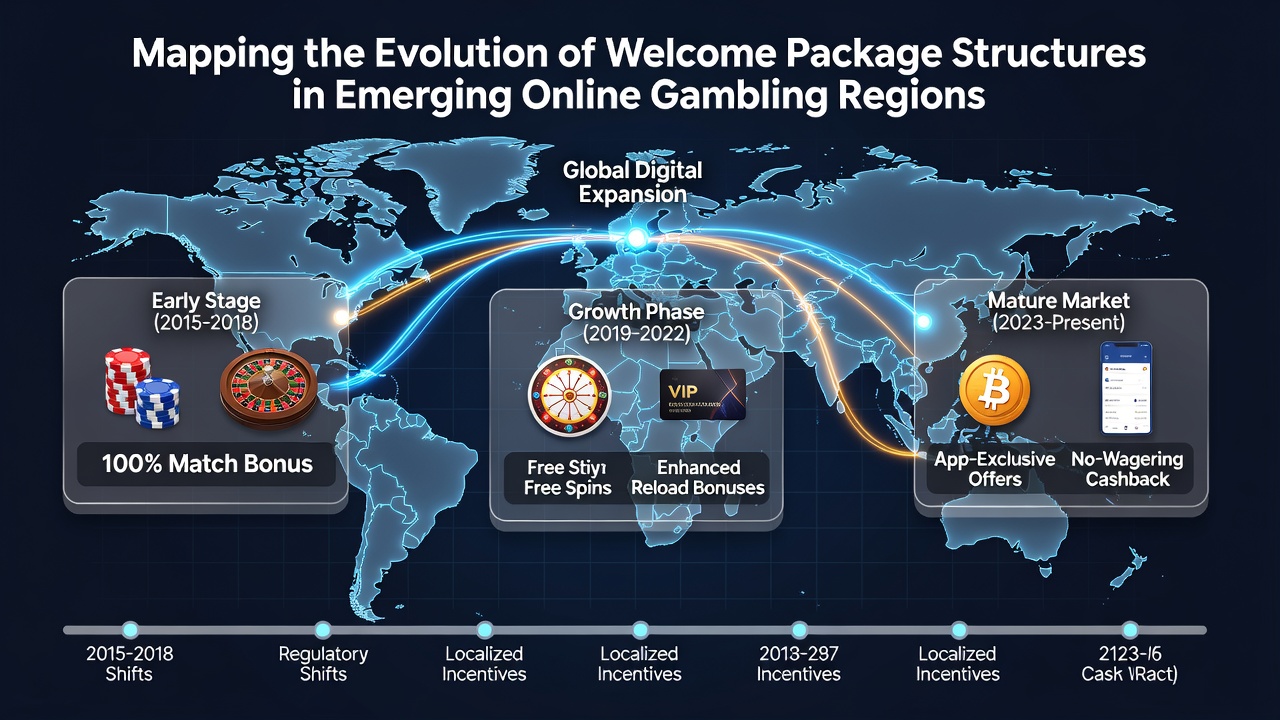
Observers note that welcome package structures have shifted considerably as new regulatory frameworks take hold in markets across Latin America, Southeast Asia, and parts of Africa since the early 2010s, and data from industry reports shows these changes reflect both technological advances and local compliance demands. Early offerings typically centered on straightforward deposit matches that required players to complete basic registration steps, yet operators gradually incorporated layered elements such as cashback tiers and loyalty credits once regional authorities introduced licensing standards that emphasized player verification and responsible gaming protocols.Initial Structures and Regulatory Triggers
Research from academic institutions indicates that markets like Brazil and Colombia began formalizing online gaming rules around 2018, which prompted operators to replace flat-rate bonuses with conditional packages tied to deposit amounts and verification timelines; these adjustments aligned with requirements from bodies such as the Brazilian Ministry of Finance that mandated clear terms for all promotional credits. In parallel, Southeast Asian jurisdictions including the Philippines updated licensing criteria in 2020, leading platforms to introduce time-bound free credits that expired unless players met activity thresholds within specified windows, and figures from regional trade associations reveal that such modifications reduced average bonus abuse rates by measurable margins.
Those tracking developments point out that cryptocurrency integration emerged as a distinguishing feature in several African markets by 2022, where operators serving Nigeria and Kenya started blending digital asset deposit bonuses with traditional fiat options to accommodate local banking limitations, while compliance audits ensured these hybrids adhered to anti-money laundering directives issued by national financial intelligence units.
Expansion Patterns Through 2025
By mid-2025, welcome packages in these emerging zones had expanded to include multi-stage reward ladders that unlocked additional credits after successive deposits, and analysts at research centers documented how this tiered approach correlated with longer initial engagement periods across mobile platforms. Operators in Latin America often paired these ladders with region-specific payment method incentives, such as reduced fees for local e-wallets, which data from licensing portals shows helped platforms capture higher shares of first-time users without extending playthrough obligations beyond regulatory caps.
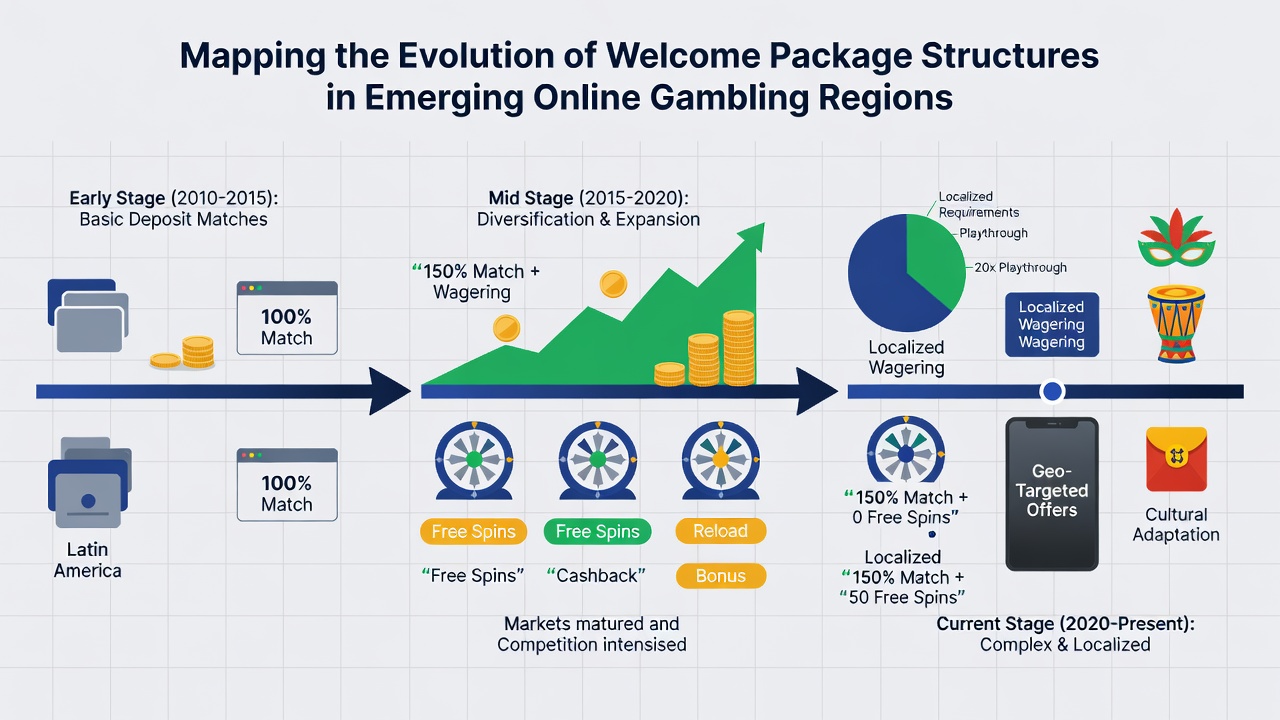
What's notable is the move toward personalization engines that adjusted bonus values based on user location and device data, a practice that gained traction after 2023 updates in Philippine and Colombian regulations required transparent disclosure of algorithmic targeting methods. Observers who examined platform logs found that customized packages frequently combined deposit matches with limited-time tournament entries, creating pathways that operators promoted through in-app notifications rather than generic email blasts.
June 2026 Snapshot and Cross-Regional Comparisons
As of June 2026, several jurisdictions continued refining these structures amid ongoing legislative reviews, with Vietnamese authorities preparing draft guidelines that could standardize bonus disclosure formats across licensed sites, and early indicators suggest operators there may adopt hybrid models already tested in neighboring markets. Comparisons between African and Latin American packages reveal that cashback components appear more prominently in regions where transaction fees remain elevated, whereas free spin allocations dominate in areas with strong mobile penetration rates according to connectivity statistics compiled by international development agencies.
Industry organizations such as the Canadian Gaming Association have published comparative studies that highlight how emerging markets adapted verification-linked bonuses to mirror practices refined in established Canadian provinces, and these reports note measurable differences in redemption rates tied to streamlined identity checks introduced during 2024-2025 transitions. Meanwhile, academic papers from Australian research groups have tracked similar evolutions in select Asian pilot programs, underscoring the role of real-time analytics in refining package eligibility without extending mandatory wagering cycles.
Conclusion
The trajectory of welcome package structures across emerging online gambling regions demonstrates consistent adaptation to local regulatory pressures and technological capabilities, with data indicating progressive incorporation of verification steps, payment flexibility, and tiered incentives that align with compliance frameworks. Continued monitoring through 2026 and beyond will likely reveal further refinements as additional jurisdictions finalize their licensing regimes, yet core patterns established in recent years provide a clear map of how these offerings have matured from basic matches into multifaceted systems designed around regional user behaviors and oversight requirements.