Investigating Sound Cue Influences on Decision Timing During Live Dealer Blackjack Sessions in Regulated Apps
Uma Weber · Jul 10, 2026
Investigating Sound Cue Influences on Decision Timing During Live Dealer Blackjack Sessions in Regulated Apps
Live dealer blackjack in regulated apps combines real-time video streams with layered audio elements that include card shuffles, dealer announcements, chip sounds, and background music, and these components create an immersive setting where timing of player choices such as hitting or standing becomes a measurable variable. Researchers tracking session data across multiple jurisdictions have noted consistent patterns in how specific audio triggers align with variations in decision speed, particularly during high-stakes hands when background noise levels rise or fall. In July 2026 several licensed platforms reported updated audio engines that adjust cue volume based on table activity, allowing analysts to compare pre- and post-update decision intervals collected through anonymized telemetry.
Audio Components in Regulated Live Dealer Environments
Regulated apps must meet technical standards set by bodies including the Alcohol and Gaming Commission of Ontario, which requires clear separation between game-critical sounds and optional background tracks so players can distinguish dealer prompts from ambient effects. Data collected from Ontario-licensed operators shows that chip-stacking audio cues appear most frequently within the first three seconds after a new hand begins, and this timing overlaps with the window when most players register their initial decisions. Studies conducted at university labs in Nevada have isolated individual cue types by muting or amplifying them in controlled test sessions, revealing that abrupt dealer voice announcements correlate with a measurable shortening of average decision latency by roughly 0.8 seconds compared to sessions using only subtle ambient tracks.
Measurement Approaches Used in Recent Analyses
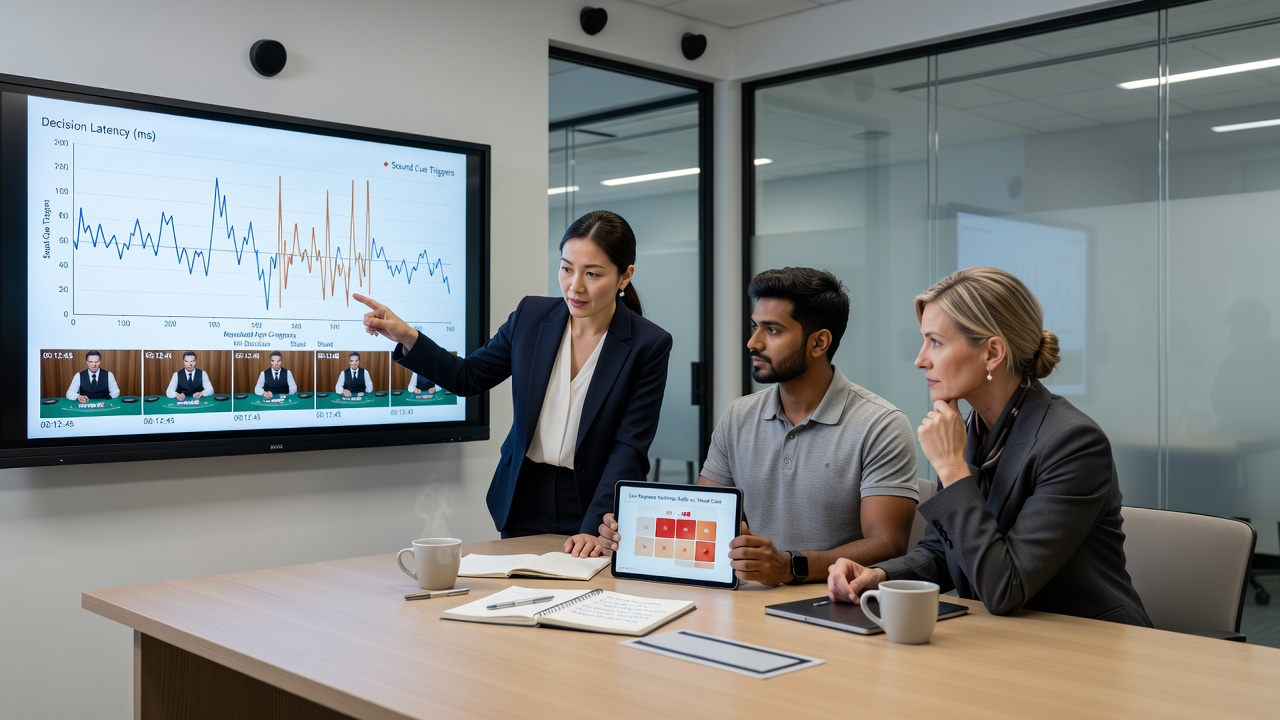
Investigators rely on timestamp logs that capture the exact moment each audio file triggers alongside the moment a player taps hit, stand, or double-down buttons, and these paired datasets allow statistical modeling of cause-and-effect relationships. One study examined more than 240,000 hands across three regulated apps operating in New Jersey and Michigan, while another focused on Australian-licensed platforms where sound design follows different volume caps; cross-comparison indicated that markets with stricter maximum decibel limits recorded slightly longer average decision times during final betting rounds. Software tools developed by research teams parse these logs automatically, flagging outliers where decision timing deviates by more than two standard deviations from session norms, and such flags frequently align with sudden increases in crowd-reaction sound layers.
Observed Correlations Between Specific Cues and Timing Shifts
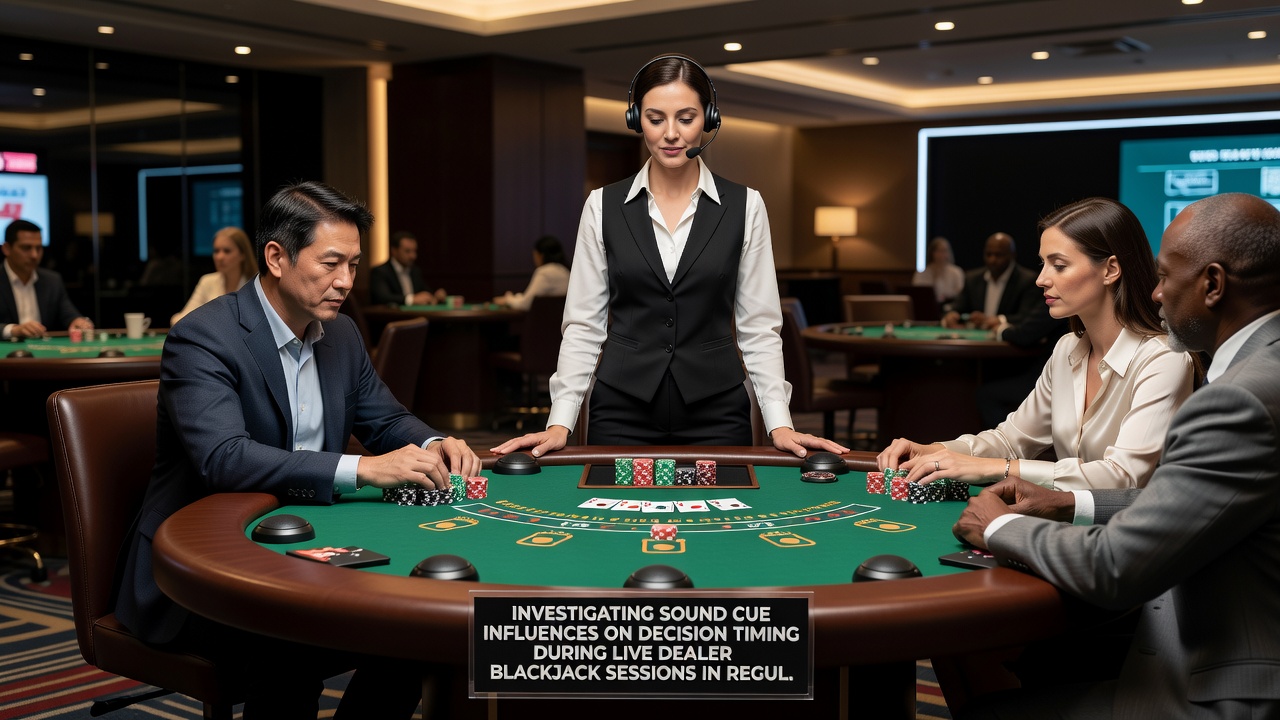
Card-flip sounds that play immediately after the dealer reveals hole cards tend to precede faster stand decisions, whereas prolonged ambient music loops without discrete events associate with extended deliberation periods before hit selections. Observers note that players in sessions featuring synchronized crowd-cheer effects after blackjack payouts show compressed timing windows on subsequent hands, yet the same players return to baseline speeds once the cheer track ends. Figures released by the New Jersey Division of Gaming Enforcement in mid-2026 documented a 12 percent reduction in average decision duration when low-frequency rumble cues accompanied insurance offers, suggesting that certain bass-heavy elements may accelerate risk-assessment processes. Conversely, high-pitched notification chimes tied to side-bet prompts produced the opposite effect, extending decision windows by an average of 1.4 seconds in the same dataset.
Regulatory Considerations and Platform Adjustments
Regulators in multiple regions now request audio-log exports during routine compliance audits so that any systematic influence on decision timing can be reviewed alongside responsible-gaming metrics. Platforms have responded by introducing optional sound profiles that let users mute non-essential cues while retaining dealer speech, and early telemetry from these features indicates a return toward longer decision intervals when background layers are removed. The Victorian Commission for Gambling and Liquor Regulation has begun including audio-timing analysis in its annual market reports, providing operators with benchmark ranges derived from aggregated session data across licensed apps. These benchmarks help developers calibrate cue intensity so that audio remains engaging without creating unintended acceleration or delay patterns during critical choices.
Future Directions for Research
Ongoing projects combine eye-tracking hardware with audio-event logging to determine whether visual attention shifts coincide with particular sound triggers, and preliminary results suggest that gaze duration on the dealer feed shortens when distinct card-shuffle audio plays. Teams at several academic institutions continue to expand sample sizes by partnering with additional regulated operators, aiming to isolate cultural or regional differences in how players respond to identical cue sets. As July 2026 draws to a close, updated datasets are expected to clarify whether dynamic volume scaling, now deployed on several major apps, produces stable timing effects across extended play periods or whether habituation reduces the initial impact within individual sessions.
Conclusion
Sound cue analysis in regulated live dealer blackjack apps has moved from exploratory observation to structured measurement supported by timestamp correlation and multi-jurisdictional datasets. Evidence collected through 2026 indicates measurable relationships between specific audio events and shifts in decision timing, while regulatory frameworks increasingly incorporate these findings into compliance reviews and platform design standards. Continued collaboration between operators, researchers, and oversight bodies will refine understanding of how audio environments interact with player behavior in real-time table games.