Detroit's Trio of Casinos Rake in $112.3 Million for March 2026 While Posting Slight Year-Over-Year Dips

Overview of March 2026 Casino Performance
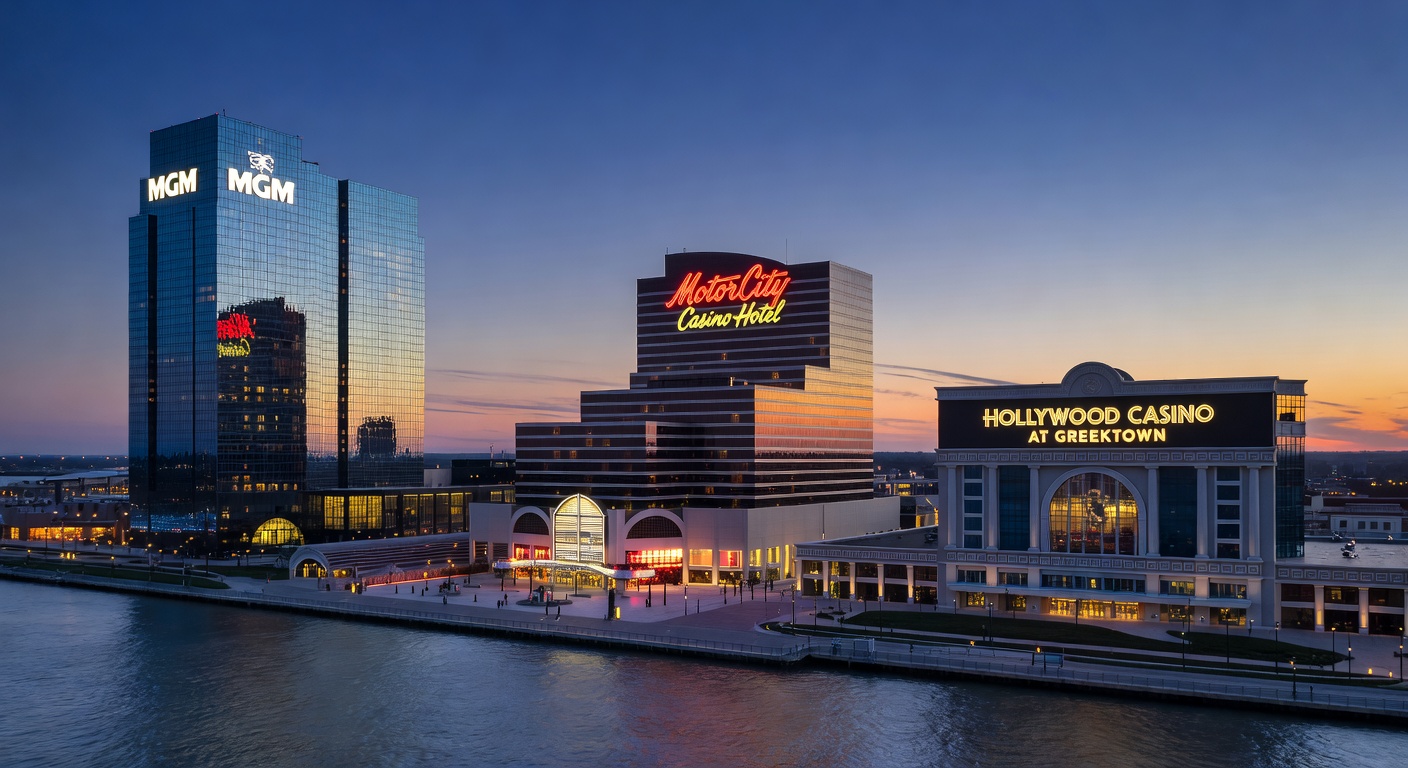
Detroit's three commercial casinos—MGM Grand Detroit, MotorCity Casino Hotel, and Hollywood Casino at Greektown—collectively generated $112.3 million in aggregate revenue, known as adjusted gross revenue or AGR, during March 2026, according to figures released by the Michigan Gaming Control Board on April 9; this total reflects the net win from gaming activities after player payouts, and while it underscores the steady draw of these venues, casino-level revenues showed modest declines compared to the prior year across all three properties.
Table games and slots drove the bulk of the haul, accounting for $111.5 million, which highlights how traditional casino floors remain the powerhouse even as other segments contribute; retail sports betting added $810,424 in qualified adjusted gross receipts, or QAGR, a metric that adjusts for promotional deductions and free play, yet this figure represents a smaller slice of the overall pie.
What's interesting here is the breakdown by operator: MGM held firm at the top with a 47% market share, MotorCity captured 31%, and Greektown trailed at 22%, patterns that observers have noted persist month after month because of factors like location, amenities, and customer loyalty programs that keep patrons returning.
Detailed Revenue Breakdown by Venue
MGM Grand Detroit led the pack once again, though its casino revenue dipped 3.5% from March 2025 levels; the property, a staple in downtown Detroit since its 1999 opening, benefits from its prime location near major hotels and entertainment districts, which helps sustain high foot traffic even in softer months.
MotorCity Casino Hotel followed closely, posting a 2.7% decline in casino revenue year-over-year, yet its integrated hotel and gaming setup—complete with luxury rooms and multiple dining options—continues to pull in visitors who blend stays with slots and tables; data shows this venue consistently ranks high in player satisfaction surveys tied to its Midtown positioning.
Greektown experienced the steepest drop at 8.9%, a figure that stands out because the casino's vibrant Greek-themed atmosphere and proximity to sports arenas usually buoy its numbers, although seasonal shifts or competition from online alternatives might explain the variance; still, its 22% share keeps it competitive in the trio.
And then there's the sports betting angle: those $810,424 in QAGR came from retail operations at the casinos themselves, distinct from online wagering handled separately by the state, where bettors place wagers at dedicated windows or kiosks amid the buzz of live games.
Year-Over-Year Comparisons and Market Dynamics
Turns out the declines—MGM's 3.5%, MotorCity's 2.7%, and Greektown's 8.9%—paint a picture of a market feeling some pressure, perhaps from broader economic factors like inflation or shifts in consumer spending that experts track through monthly reports; aggregate casino revenue for the group fell slightly from March 2025, although the exact prior-year total isn't specified in the latest release, the percentage drops reveal where the rubber meets the road for each operator.
Market shares held steady, with MGM's 47% dominance reflecting its scale and marketing muscle; MotorCity's 31% slice shows resilience, while Greektown's 22% underscores the challenges smaller footprints face in a crowded field, yet all three contribute to Detroit's gaming ecosystem that employs thousands and fuels local tourism.
People who've studied these trends often point out how March figures can vary due to calendar quirks—like fewer weekends or holidays—compared to busier months, but the $112.3 million AGR total remains robust, especially when viewed against national casino benchmarks where urban markets like Detroit hold their own.
Tax Contributions to State and City
From this revenue came significant payouts: $9.0 million flowed to Michigan state gaming taxes, calculated at rates like 8.1% on slots and varying percentages on tables, while $13.3 million went directly to the City of Detroit under a unique wager tax structure that funds municipal services from police to infrastructure.
Here's where it gets interesting—these payments, totaling over $22 million for the month, demonstrate how casino operations prop up public coffers; Detroit's share, in particular, stems from a 2020 voter-approved increase that bumped the rate to 11.5% on certain revenues, ensuring the city benefits substantially from its gaming hubs.
Observers note that such contributions have been steady since the casinos opened in the late 1990s, with March 2026's figures aligning with patterns where even slight revenue dips translate to reliable tax streams because of fixed percentage formulas.
Sports Betting's Role in the Mix
Retail sports betting chipped in that $810,424 QAGR, a niche but growing segment where players wager on everything from NBA matchups to NHL playoffs right inside the casinos; unlike the massive online sportsbooks that dominate Michigan's $2 billion-plus annual handle, these in-person bets foster the social vibe of cheering crowds amid roulette wheels and poker rooms.
Data indicates retail QAGR often fluctuates with major events—think March Madness basketball turning lounges into frenzy zones—yet it supplements the core $111.5 million from tables and slots without overshadowing them; for context, qualified receipts adjust for promos like risk-free bets that operators use to lure fans.
Context Within Michigan's Gaming Landscape
But here's the thing: these Detroit casinos operate under strict oversight from the Michigan Gaming Control Board, which mandates monthly transparency to ensure fair play and revenue accuracy; the April 9 announcement for March data comes as the industry eyes April 2026 returns, where warmer weather and events like the Detroit Grand Prix might lift numbers higher.
Take one case where experts analyzed prior springs: footfall spikes with conventions and festivals, potentially reversing March's modest dips; while specifics for April remain pending, historical patterns suggest a rebound, especially as MGM, MotorCity, and Greektown roll out summer promotions tied to their shows and buffets.
It's noteworthy that the trio's combined AGR excludes internet gaming and online sports, which Michigan tracks separately—those channels hit record highs recently—but the brick-and-mortar focus here spotlights the enduring appeal of physical venues where the clink of chips and thrill of live dealers keep drawing crowds.
Those who've followed the beat know Detroit's casinos aren't just revenue machines; they anchor a revitalized downtown, blending gaming with cultural spots like Little Caesars Arena nearby, and their March performance—despite the dips—affirms that stability.
Implications for Operators and Stakeholders
Market shares like MGM's 47% give it leverage for expansions, such as recent upgrades to high-limit salons that cater to big spenders; MotorCity's 31% supports its hotel expansions, while Greektown's 22% prompts tweaks like enhanced loyalty perks to claw back share from rivals.
And the taxes? That $9.0 million state cut funds education and roads, whereas Detroit's $13.3 million bolsters budgets strained by post-pandemic recoveries; figures like these ripple through local economies, supporting jobs from dealers to valets.
Now, as April 2026 unfolds with the report fresh in mind, stakeholders watch closely—will sports playoffs juice retail betting, or will slots surge with tourist influxes?—yet March's data sets a benchmark that's battle-tested over decades.
Wrapping Up the March Numbers
In the end, Detroit's casinos delivered $112.3 million AGR for March 2026, with $111.5 million from tables and slots plus $810,424 from retail sports betting, even as year-over-year declines hit 3.5% at MGM, 2.7% at MotorCity, and 8.9% at Greektown; market shares stayed true—MGM 47%, MotorCity 31%, Greektown 22%—fueling $9.0 million in state taxes and $13.3 million for the city, contributions that underscore the venues' economic weight.
With the Michigan Gaming Control Board report sparking discussions into April, these figures remind everyone of a market that's resilient, competitive, and deeply woven into Detroit's fabric; upcoming months will tell if the dips were mere blips or harbingers, but for now, the numbers speak volumes.