Decoding Tiered Reward Escalations in Daily Login Sequences for Smartphone Dealer Simulations
Drew Lang · Aug 26, 2026

Decoding Tiered Reward Escalations in Daily Login Sequences for Smartphone Dealer Simulations
Smartphone dealer simulations deliver live-style table games such as blackjack and roulette through mobile interfaces, and operators integrate daily login sequences that escalate rewards across multiple tiers based on consecutive activity. These systems track login streaks and player levels to unlock progressive benefits, with initial tiers offering basic credits and later stages providing multiplier effects on wagers or bonus rounds. Data from regulated markets indicates that such escalations maintain consistent user returns, as consecutive logins trigger automatic upgrades without requiring additional deposits in many cases.
Platforms structure these sequences so that day-one rewards consist of fixed credit amounts, while day-seven and day-fourteen milestones introduce percentage-based boosts that apply directly to simulated dealer sessions. Observers note that backend algorithms adjust tier thresholds according to regional regulatory requirements, ensuring compliance with playtime limits and responsible gaming protocols. In August 2026, several operators updated their mobile applications to align with new reporting standards in North American and European jurisdictions, incorporating real-time notifications that display remaining days until the next escalation level.
Mechanics of Tier Progression in Mobile Environments
Daily login rewards operate through a combination of streak counters and player classification systems, where each tier corresponds to specific reward multipliers that activate upon reaching predefined login milestones. For instance, basic tiers grant standard credit packages, whereas advanced tiers deliver escalating percentages that compound across multiple sessions, and these adjustments occur automatically once the system registers the required activity pattern. Researchers have documented how these progressions incorporate visual indicators on the app interface, such as progress bars and countdown timers, which guide users through the sequence without disrupting gameplay flow.
Smartphone dealer simulations often synchronize login data across devices, allowing players to maintain streak continuity when switching between phones and tablets while still adhering to single-account verification rules. Figures from industry reports reveal that tier escalations frequently reset on a monthly cycle, yet accumulated loyalty points from prior periods carry forward to influence starting positions in subsequent sequences. This design permits operators to balance short-term incentives with longer-term retention objectives across diverse player demographics.
Regulatory Frameworks and Data Tracking Standards
Regulated markets enforce transparency requirements on reward disclosures, mandating that operators publish tier structures and escalation criteria within app terms and help sections. The American Gaming Association compiles annual statistics showing how mobile platforms report login-based rewards separately from deposit-driven promotions, which helps distinguish these sequences from traditional bonus offers. Platforms must also implement verification checks that confirm player eligibility before applying escalated rewards, particularly in jurisdictions that cap daily credit issuances.
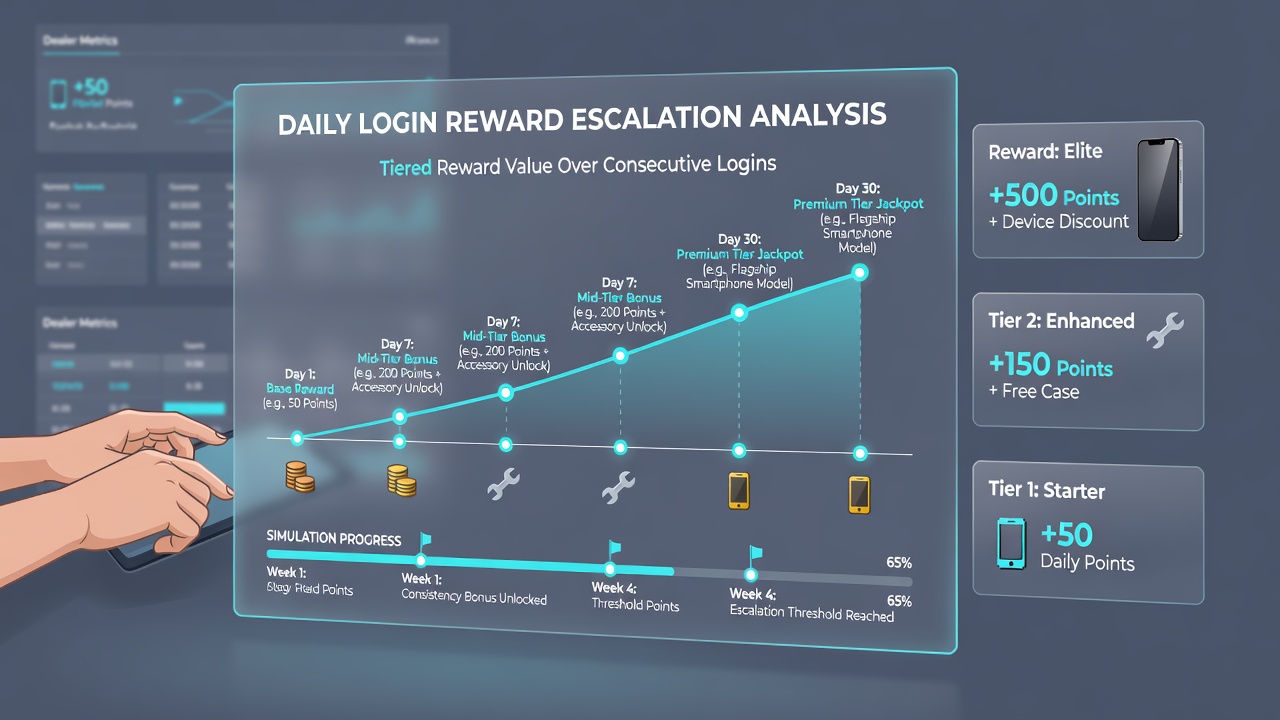
European and Australian regulatory bodies require operators to log all tier advancements for audit purposes, creating datasets that track average time spent per tier and conversion rates from login rewards into active play sessions. One analysis conducted by academic researchers examined correlations between tier complexity and session duration, finding that clearer escalation paths tended to align with steadier engagement patterns across tested applications. These findings contribute to ongoing refinements in how developers calibrate reward intervals for different device types and network conditions.
Integration with Dealer Simulation Features
Daily login sequences interact directly with dealer simulation elements by applying tier benefits to in-game mechanics such as card dealing speeds and table limits. Higher tiers may unlock access to faster dealer response times or expanded betting ranges within the simulated environment, and these enhancements activate automatically once the login requirement is met. Technical documentation from platform providers describes how server-side scripts validate streak data before enabling these privileges, preventing unauthorized access during network interruptions.
Operators monitor aggregate data to adjust escalation curves, ensuring that reward pacing matches typical usage patterns observed in smartphone environments where sessions often occur in short bursts throughout the day. Reports from the New Jersey Division of Gaming Enforcement indicate that mobile dealer titles incorporating tiered logins have shown stable participation rates when compared against non-tiered alternatives, though exact metrics vary by title and market segment.
Conclusion
Tiered reward escalations in daily login sequences for smartphone dealer simulations represent a structured approach to player retention that combines streak tracking with progressive benefits across regulated platforms. Current implementations reflect ongoing adaptations to technological capabilities and oversight standards, with data collection supporting refinements in reward delivery. As mobile applications continue to evolve through 2026, these sequences maintain their role in delivering consistent engagement pathways while operating within established compliance boundaries.