Charting Seasonal Promotion Cycles in Legal Online Betting Platforms
Drew Lang · Jul 15, 2026
Charting Seasonal Promotion Cycles in Legal Online Betting Platforms
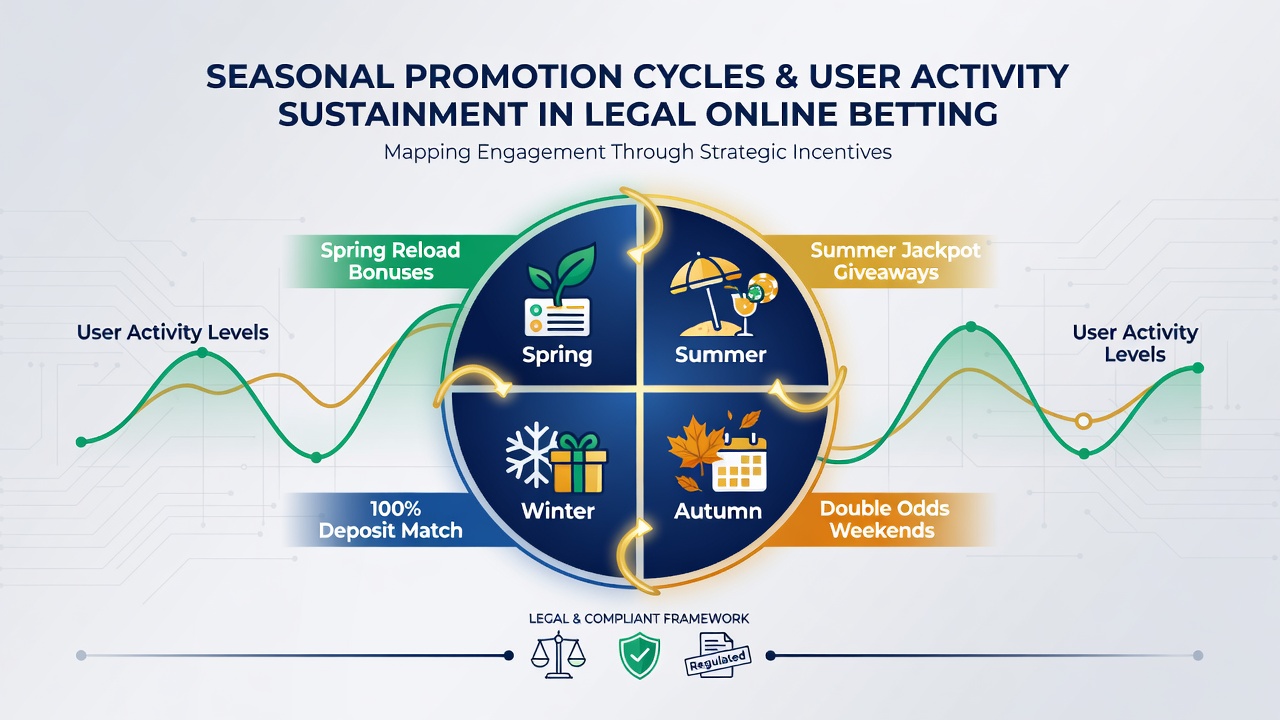
Legal online betting platforms track promotion cycles that align with calendar events, sports calendars, and regional holidays to maintain consistent user engagement throughout the year. These cycles operate on predictable intervals where operators deploy deposit matches, free bets, and loyalty rewards timed to periods of heightened interest such as major football leagues or summer racing festivals. Data collected from regulated markets shows activity levels rising between 25 and 40 percent during these windows compared with baseline months.
Mapping Annual Cycles Across Regulated Markets
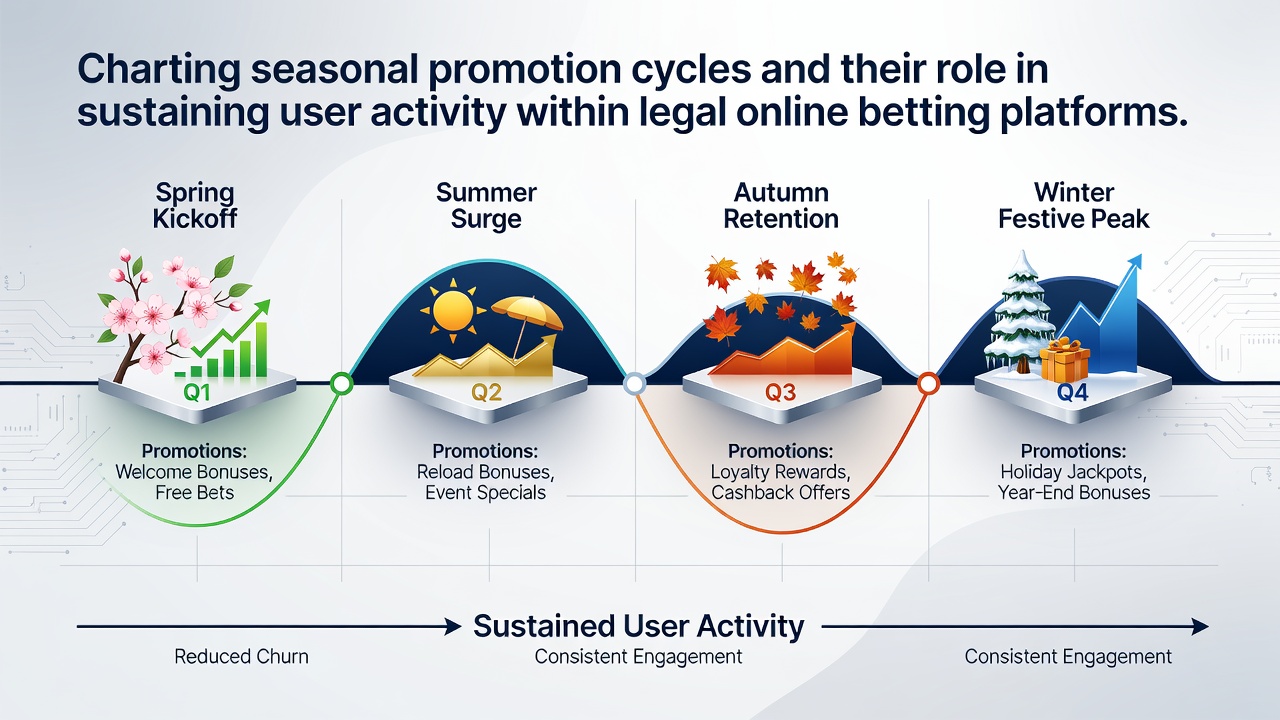
Operators divide the year into distinct phases that correspond to external triggers rather than arbitrary dates. Winter months often feature enhanced accumulator bonuses tied to European football schedules while spring promotions emphasize horse racing events in jurisdictions like those overseen by the Alcohol and Gaming Commission of Ontario. Summer cycles shift toward cricket and baseball tournaments with cashback offers that reset weekly. Fall periods incorporate holiday-themed deposit incentives that run through December and January.
Researchers at academic institutions have documented how these timed interventions prevent the typical post-peak drop-off in session frequency. One longitudinal study covering 18 licensed platforms across North America and Australia recorded that users receiving seasonal offers maintained login rates 1.8 times higher than control groups during the subsequent eight weeks. The pattern repeats annually with only minor adjustments for local regulatory changes.
Mechanics of Retention Through Timed Incentives
Platforms structure promotions in layered tiers so that initial bonuses encourage deposits while follow-up rewards require continued participation across multiple events. A typical cycle begins with a welcome match that activates during the first week of a sports season then transitions into streak bonuses awarded for consecutive days of activity. This approach creates compounding effects where early engagement unlocks later rewards without extending mandatory playthrough periods beyond regulatory limits.
Figures released by the New Jersey Division of Gaming Enforcement for the first half of 2026 indicate that platforms using synchronized seasonal campaigns reported average monthly active user growth of 12 percent between March and June. The same dataset shows that retention metrics remained elevated into July 2026 when operators introduced mid-year refresh offers tied to international tournaments. These interventions interrupt the natural decline curve that appears when promotions remain static.
Regional Variations and Regulatory Influences
Different jurisdictions impose distinct constraints that shape how operators design their cycles. European markets often require clear separation between promotional terms and core gameplay while Australian state regulators mandate prominent display of responsible gambling messaging alongside every offer. Platforms adapt by embedding these requirements into automated systems that trigger region-specific variants of the same seasonal theme.
Industry reports compiled by the European Gaming and Betting Association reveal that operators who align promotions with local sporting calendars achieve higher conversion rates from casual visitors to registered users. In Canada, data covering the 2025-2026 fiscal year demonstrated that provinces permitting online betting saw engagement spikes during national hockey playoffs that exceeded those recorded in non-playoff months by 33 percent. Operators achieve these results through precise scheduling rather than increased marketing spend.
Measurement Frameworks and Performance Indicators
Analytics teams monitor several core indicators to evaluate cycle effectiveness. Session duration, deposit frequency, and cross-product participation all serve as proxies for sustained activity. Platforms compare these metrics against historical baselines collected during non-promotional periods to isolate the contribution of each seasonal campaign. Advanced systems now apply machine learning models that predict optimal timing windows based on past user cohorts.
One case examined by analysts at a European research consortium tracked a single operator across two consecutive seasons. The introduction of staggered summer promotions produced a 19 percent increase in average revenue per user while simultaneously lowering the rate of account dormancy by 14 percent. Similar patterns emerged in subsequent cycles when the operator refined timing based on the earlier results.
Conclusion
Seasonal promotion cycles function as structured mechanisms that regulated platforms use to counteract predictable fluctuations in user activity. By aligning incentives with external calendars and measuring outcomes through standardized indicators, operators sustain engagement across annual periods. Available data from multiple jurisdictions confirms that these approaches produce measurable retention effects when implemented within established regulatory frameworks. Continued refinement of timing and reward structures remains an ongoing process supported by performance tracking across licensed markets.